Case study · Relay
Self-initiated conceptOne visual language for a devtool.
Relay is an invented product: background agents that run in isolated cloud sandboxes, fix bugs and run migrations, and wait for your approval on the risky steps. I designed the brand and a six-page site at three breakpoints, then built it.
- Type
- Self-initiated concept · invented brand
- Year
- 2026
- Scope
- 6 pages × 3 breakpoints = 18 artboards
- Role
- Brand, site system, build
- Stack
- Figma, Astro, Motion, iso.ts, Framer port
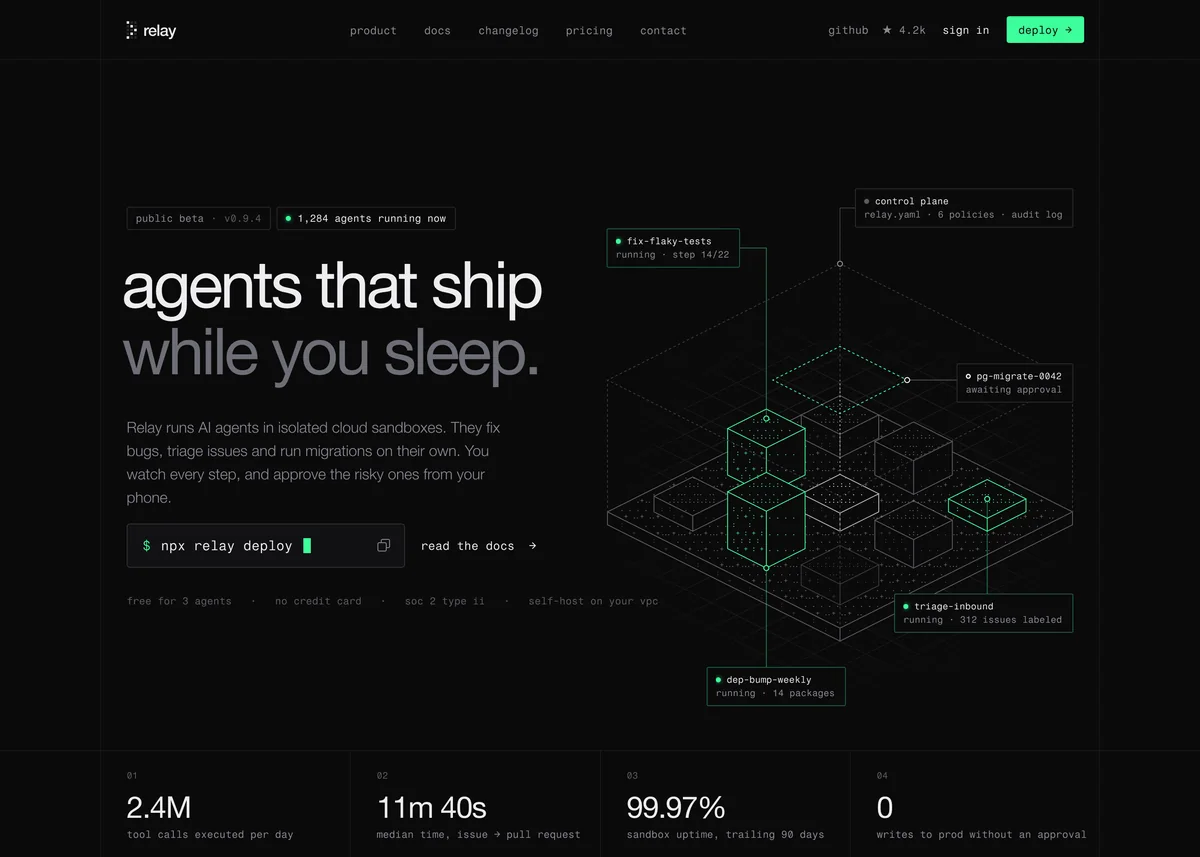
Invented brand: metrics and logos shown are illustrative.
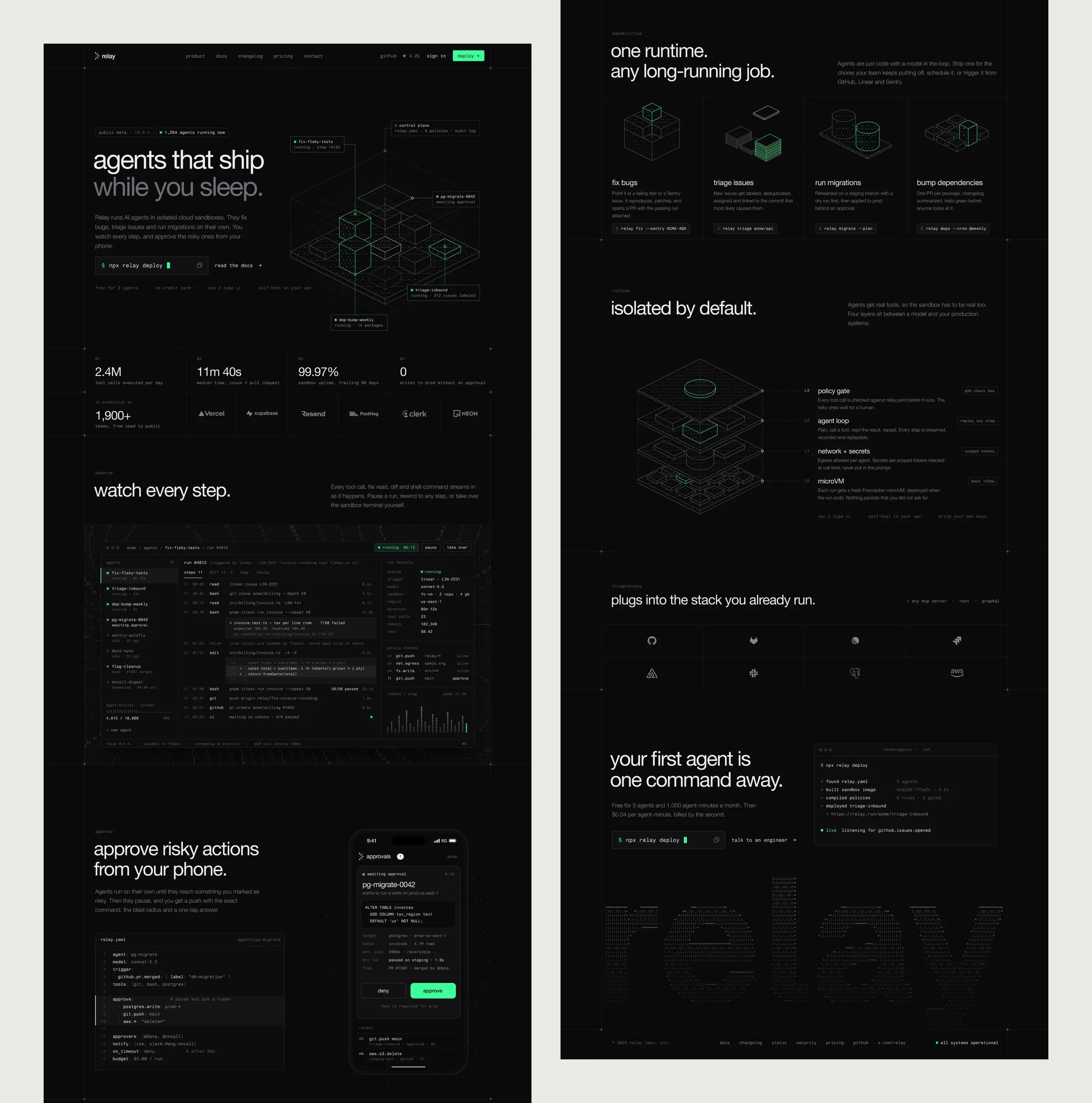
The whole landing
Every section, top to bottom.
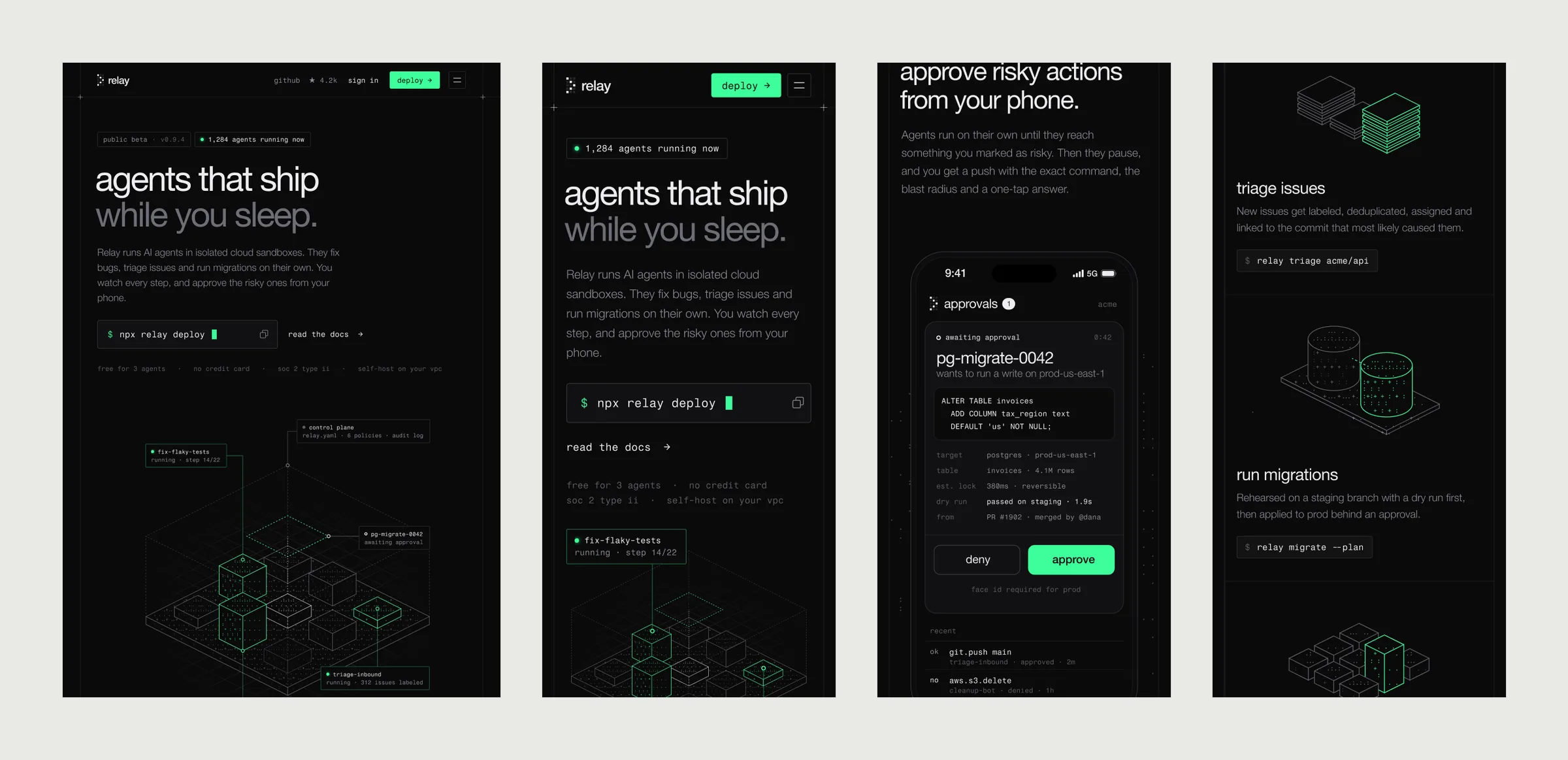
The full page as designed, cut in two and read left to right. Below it, the same page at tablet and phone widths.
Context
A developer should get the whole promise without reading the docs.
Agents run, you watch every step, risky steps wait for your approval, each run is sandboxed in four layers, and you pay per agent-minute. Each page carries one of those ideas, in the same visual language.
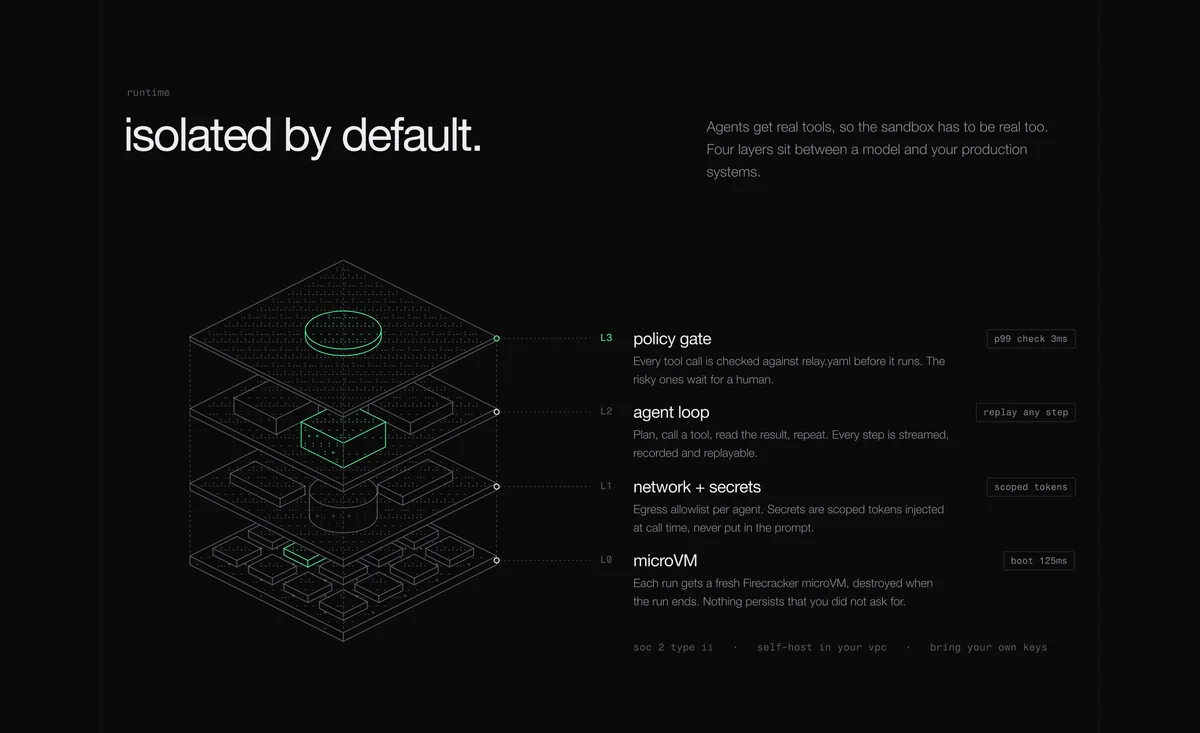
A scene engine
Every hero is generated, so six pages read as one system.
A small scene engine, iso.ts, turns boxes, cylinders and segments into depth-sorted polygons and ASCII layers, then into Figma vectors. One accent, #3DFF9A, is reserved for live state.
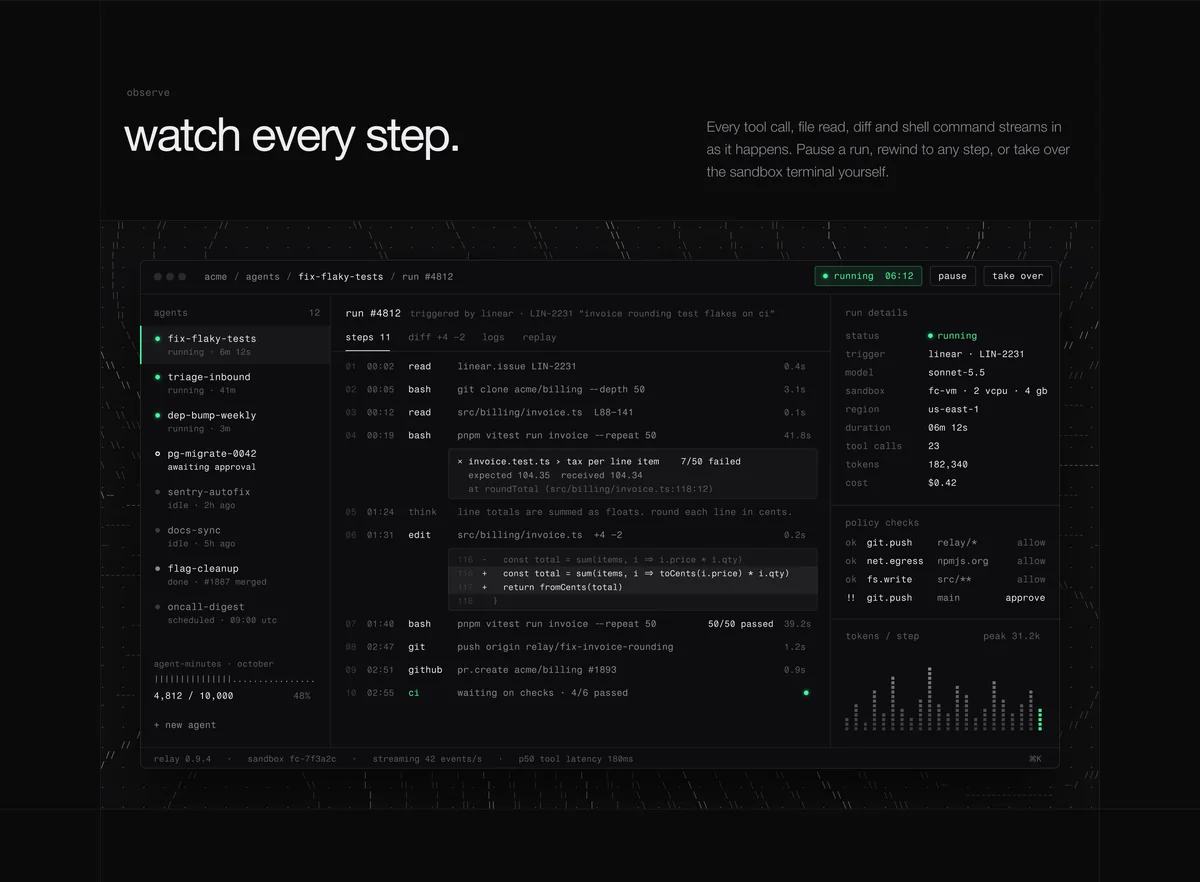
Watch every step
The run console is the product’s proof.
Every tool call, diff and test run is visible as it happens, so trust comes from what you can see rather than what the page claims.
Approvals and pricing
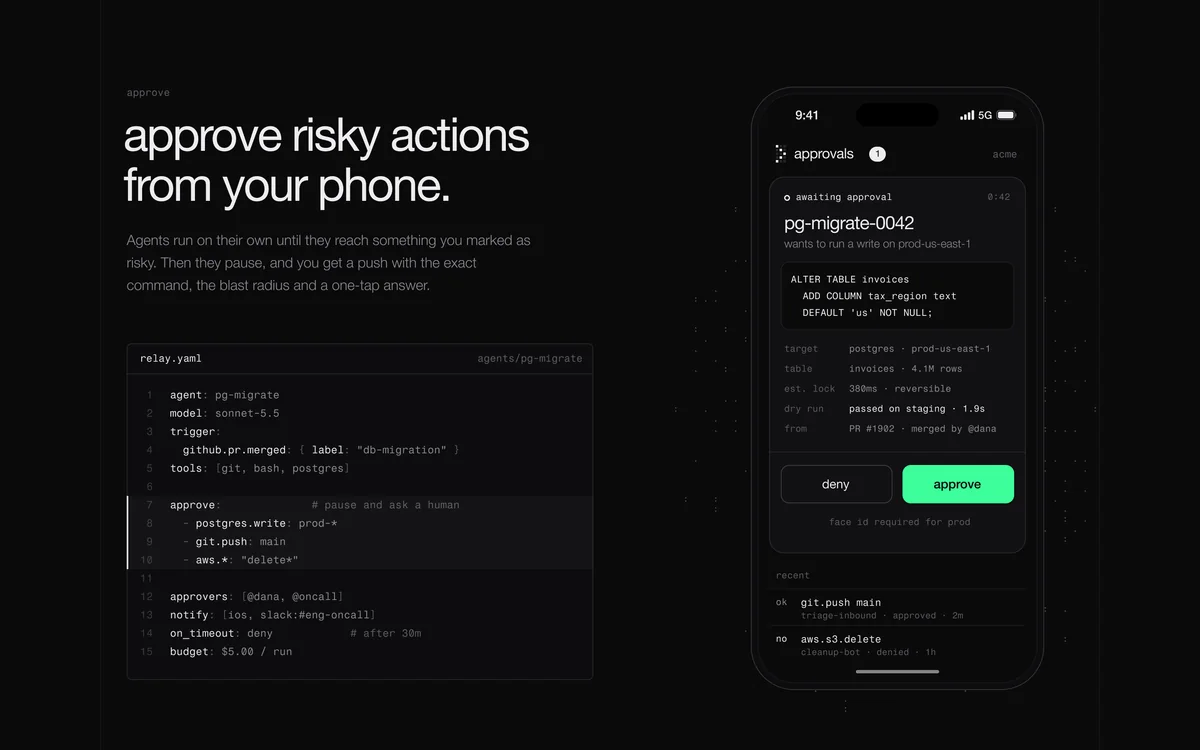
Risky actions wait for your phone; you pay by the second.
The approval flow and the pricing page use the same parts as the console, so the system holds from the hero to the bill.

The system
18 artboards, then a production build and a Framer port.
Six pages, each at 1440, 810 and 390, built in Astro with Motion and ported to Framer.

18 artboards, a production build and a Framer port, in one language.
Self-initiated concept · brand, design and build by me · figures are illustrative